
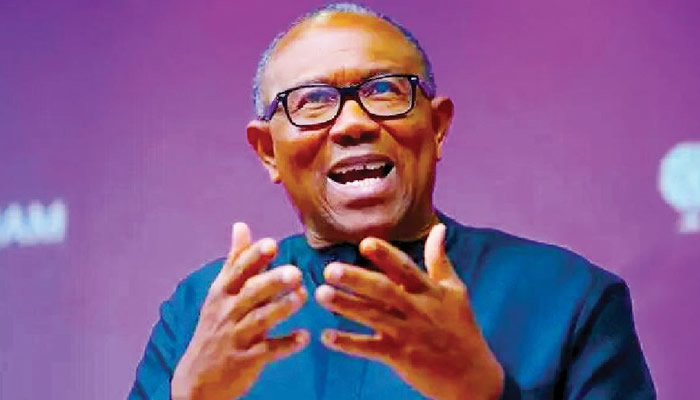
Obi Slams Tinubu Over Rising Debt, Demands Accountability for N200 Trillion Borrowing
- Politics
- June 10, 2026
- 0 Comments

The presidential candidate of the Nigeria Democratic Congress (NDC), Peter Obi, has criticized the administration of President Bola Ahmed Tinubu over what he described as excessive borrowing and a lack of transparency in the management of public funds.
In a statement posted on his X (formerly Twitter) account on Tuesday, Obi expressed concern over Nigeria's rising public debt, which he said has climbed to approximately N200 trillion under the current administration.
According to Obi, the nation's debt has increased by more than N100 trillion within three years, a figure he described as alarming when compared to the approximately N49 trillion accumulated during the eight-year administration of former President Muhammadu Buhari.
He argued that the pace of borrowing under the Tinubu administration reflects what he termed "imprudent governance" and raises serious questions about fiscal accountability.
"President Bola Tinubu's administration has engaged in remarkably imprudent borrowing, escalating Nigeria's total debt to approximately N200 trillion. This represents an increase of over N100 trillion within a mere three years," Obi stated.
The former Labour Party presidential candidate further cited figures from Nigeria's Budget Office, claiming that the Federal Government borrowed N11.89 trillion between January and September 2025, exceeding its planned borrowing target of N10.34 trillion by about N1.54 trillion.
Obi questioned why such an overrun had not attracted sufficient public scrutiny or explanation from relevant government agencies.
"Under a responsible and accountable government, such an overshoot would necessitate rigorous scrutiny and explanation from relevant governmental bodies. Regrettably, this is not the reality under the current administration," he said.
He also alleged that only N3.10 trillion of the borrowed funds was utilized for capital projects during the period under review, representing just 17.66 percent of the N17.58 trillion budgeted for capital expenditure.
According to him, this leaves a significant funding gap of about N14.48 trillion and raises concerns about how the remaining borrowed funds were spent.
"The most disturbing aspect of the financial management fiasco under Bola Tinubu is that there is no explanation or information regarding how the balance was utilized or deployed," Obi stated.
He called on the Federal Government to provide Nigerians with a detailed account of how borrowed funds have been utilized, stressing that transparency and accountability are essential for public trust and sustainable economic growth.
Nigeria's debt profile has come under increasing scrutiny following major economic reforms introduced by the Tinubu administration in 2023, including the removal of fuel subsidies and the unification of the foreign exchange market.
While government officials maintain that borrowing is necessary to finance critical infrastructure and development projects, critics argue that rising debt without corresponding economic growth could place additional pressure on the country's finances.
President Tinubu had earlier disclosed that Nigeria is expected to spend approximately $11.6 billion on debt servicing in 2026, further fueling concerns about the sustainability of the nation's debt burden.
As debate continues over the country's fiscal direction, economists and policy analysts have called for greater transparency, improved revenue generation, and prudent management of public resources to safeguard Nigeria's economic future.

Ejikeme Augustine Eloka
Founder & Lead Publisher: A website developer and community builder with a heart for local development and communication. Augustine oversees the overall direction, editorial policy, and partnerships for Kwale Post.
Comments (0)
Please login to comment.