
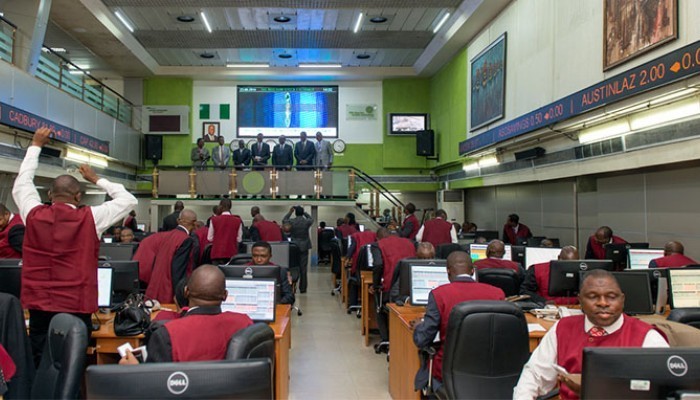
Nigeria's equities market has emerged as the world's best-performing stock market in dollar terms this year, surpassing South Korea following a strong rally fueled by economic reforms, improved investor confidence, and a strengthening naira.
According to data compiled by Bloomberg across 92 global stock exchanges, Nigeria's benchmark stock index has delivered a 67 per cent return in dollar terms year-to-date, edging ahead of South Korea's Kospi Index, which has returned 66 per cent over the same period.
The shift comes as South Korea's stock market has lost momentum amid declining investor confidence in artificial intelligence (AI)-related stocks. The Kospi Index has fallen 22 per cent from its June 19 peak, pushing the market into technical bear territory.
The downturn has been compounded by weakness in the South Korean won, which has depreciated by about five per cent against the U.S. dollar since the beginning of the year, making it one of Asia's weakest-performing currencies.
In contrast, Nigeria's stock market has continued its upward trajectory, supported by improving macroeconomic conditions, ongoing economic reforms, firmer global oil prices, and enhanced foreign exchange liquidity. The naira has also appreciated by approximately four per cent against the U.S. dollar since January, further boosting returns for foreign investors.
Financial services stocks have played a major role in driving the rally on the Nigerian Exchange (NGX), with several companies posting remarkable gains.
Among the standout performers is Fortis Global Insurance Plc, which has recorded an estimated 1,400 per cent return in dollar terms this year, making it one of the market's top-performing stocks.
Unlike South Korea, where technology and AI-related companies account for a significant share of market performance, Nigeria's stock market has limited exposure to the AI sector, insulating it from the recent global technology sell-off.
Investor sentiment has also been strengthened by recent developments involving S&P Dow Jones Indices (S&P DJI), which placed Nigeria on its 2027 watchlist for a possible upgrade from a "Standalone" market to a "Frontier" market.
According to S&P DJI, the decision reflects significant regulatory reforms aimed at improving market transparency, accessibility, enforcement, and overall market integrity. The index provider, however, noted that sustained policy implementation and stronger operational resilience would be crucial before any reclassification is approved.
A successful return to Frontier Market status is expected to increase Nigeria's visibility among global institutional investors and attract additional capital inflows from funds that track frontier market indices.
The impressive performance comes as the Nigerian stock market recorded one of its strongest daily gains in recent weeks.
On July 8, 2026, the NGX All-Share Index rose by 2.27 per cent to close at 242,459.98 points, up from 237,083.28 points recorded in the previous session. Market capitalisation also increased by N3.45 trillion to N155.59 trillion.
The rally was largely driven by Airtel Africa, whose shares gained the maximum allowable daily increase of 10 per cent to close at N5,801.40.
Following the surge, the market's year-to-date return climbed to 55.81 per cent, recovering significantly from the 46.78 per cent recorded on July 7 and returning to levels last seen before the June market correction.

Comments
Join the conversation and share your thoughts.
Login Required
Please login to join the conversation and post a comment.
No comments yet
Be the first to share your thoughts on this story.