

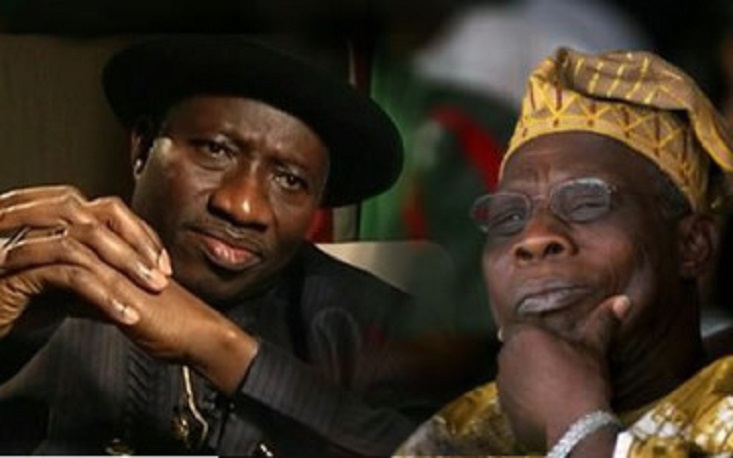
Former Presidents Olusegun Obasanjo and Goodluck Jonathan have criticised the growing role of the judiciary in determining electoral outcomes in Nigeria, warning that courts should not become the ultimate arbiters of political power.
The former presidents spoke at the 2026 Goodluck Jonathan Foundation Democracy Dialogue in Bauchi, where they raised concerns about Nigeria’s democratic system and called for reforms ahead of the 2027 general elections.
Jonathan described Nigeria’s extensive post-election litigation as unusual compared with other African countries, arguing that elections should primarily be decided by voters at the ballot box.
“The Nigerian situation is extremely different from most other African countries. The kind of election litigation we experience here is uncommon. I can describe the Nigerian situation as a very anomalous one,” Jonathan said.
He also expressed concern over the increasing involvement of courts in the internal affairs of political parties, particularly in disputes over the selection of candidates and recognition of party leadership.
According to him, political parties should be responsible for choosing their candidates, while the judiciary should only intervene where there is a clear violation of the law.
Jonathan argued that where an election is fundamentally compromised, the appropriate democratic response should ordinarily be a fresh election rather than a judicial decision that effectively replaces the votes of millions of citizens.
Obasanjo similarly questioned the situation in which millions of Nigerians participate in an election, only for a small panel of judges to ultimately determine who wins.
He said the situation was particularly troubling in governorship disputes, where judges who may not even be from the affected state could determine its political leadership.
The former president also criticised Nigeria’s winner-takes-all political system, saying it has encouraged a culture in which political opponents are treated as enemies rather than legitimate participants in democratic governance.
“When you talk about loyal opposition in an African setting, opposition means enemy. Then do you have a loyal enemy? So, what do you do with your enemy? You crush him and destroy him, and that is what we have,” Obasanjo said.
He also questioned the first-past-the-post electoral system, arguing that a narrow victory often gives the winner almost complete control while disregarding the interests of those who voted differently.
“If you beat me by one vote, then you take it all and whatever I have does not matter,” he said.
The former presidents’ comments come as Nigeria prepares for the 2027 general elections, with renewed calls for electoral and judicial reforms aimed at ensuring that election outcomes more accurately reflect the choices of voters.
They maintained that strengthening the electoral process and reducing excessive post-election litigation would help restore public confidence in Nigeria’s democracy.
Comments
Join the conversation and share your thoughts.
Login Required
Please login to join the conversation and post a comment.
No comments yet
Be the first to share your thoughts on this story.